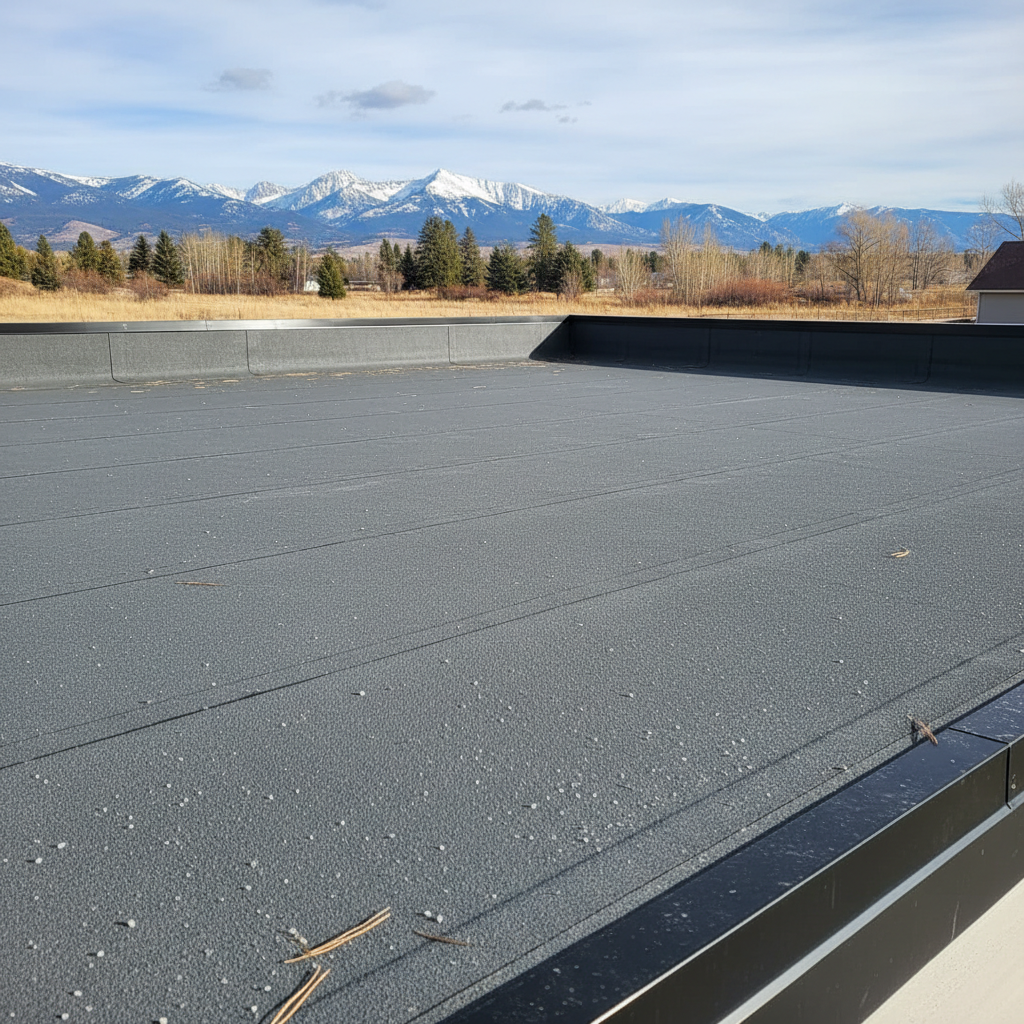
Flat roofs. You don't see them as often on houses around Bozeman as you do pitched roofs, but they're definitely out there. Think modern homes, additions, or even those commercial buildings that get converted into something new. And if you've got one, you probably have some specific worries. People ask me about them constantly, so let's just jump right into the questions I hear most from folks like you.
What kind of flat roof systems work best for Bozeman's weather?
This is probably the top question, and for good reason. Our weather here in Bozeman isn't exactly mild, is it? We deal with heavy snow loads, huge temperature swings – from scorching summer sun to deep winter freezes – and then those freeze-thaw cycles that can really mess with materials. For flat roofs, you're generally looking at a few main types: TPO, EPDM, and Modified Bitumen.
TPO (Thermoplastic Polyolefin) is a single-ply membrane that's super popular. It's white, which is great because it reflects sunlight and helps keep your building cooler in the summer, saving on AC bills. It's also pretty tough against punctures and tears. Plus, the seams are heat-welded, making them incredibly strong and watertight. EPDM (Ethylene Propylene Diene Monomer), often called 'rubber roofing,' is another single-ply choice. It's black, so it absorbs heat; that can be a good or bad thing, depending on what your building needs. It's very flexible, which really helps with our temperature changes, and it's known for lasting a long time. Modified Bitumen is a bit different. It's an asphalt-based product, often installed in layers using a torch or adhesive. It's tough, but the installation can be more involved, and it doesn't reflect heat as well as TPO. For Bozeman, I usually recommend TPO or EPDM for most homes. Their flexibility and resistance to our extreme conditions just make sense. They simply hold up better over time to the snow and ice we get, especially in places like the Hyalite Foothills where snow tends to stick around.
Do flat roofs actually drain properly, or do they just hold water?
This is a big misunderstanding. A properly installed 'flat' roof isn't truly flat. It has a slight slope, usually between 1/4 inch and 1/2 inch per foot. This directs water towards drains, scuppers, or the edge for runoff. If your flat roof is holding standing water for more than 48 hours after rain or snow melt, you've got a problem. That's called 'ponding,' and it's a major red flag for potential leaks and faster material breakdown. It means either the original slope wasn't put in right, or the structure underneath has settled, creating low spots. We always make sure to design and install with proper drainage in mind. It's not something we compromise on.
How long can I expect a flat roof to last in our climate?
With proper installation and regular maintenance, you can expect a good quality flat roof to last a long time. TPO and EPDM systems typically come with warranties from 15 to 20 years, but I've seen them last 25-30 years or even more out in the field when they're well cared for. Modified Bitumen usually falls in the 10-20 year range. The key here, though, is "proper installation" and "regular maintenance." If you cut corners on either, you're going to drastically shorten that lifespan, especially with our heavy snow loads and intense UV exposure.
What kind of maintenance does a flat roof need?
Maintenance is super important for flat roofs, maybe even more so than for a steep-slope roof. You'll want to do at least two inspections a year – one in the spring after the snow melts and another in the fall before winter hits. What are you looking for? Debris, for starters. Leaves, branches, and dirt can clog drains and scuppers, leading to ponding. You also want to check for any cracks, punctures, or tears in the membrane. Look at the seams – are they still tightly sealed? Check around any penetrations like vents, skylights, or AC units; these are common spots for leaks, believe me. Clear out your gutters and downspouts if you have them. If you see anything suspicious, get it looked at. Don't wait for a leak to show up inside your house.
Are flat roofs more prone to leaks than pitched roofs?
Not necessarily. But when they do leak, it can sometimes be tougher to find the source. A well-installed flat roof with good drainage shouldn't leak any more than a pitched roof. The problem often comes down to poor installation, not enough maintenance, or damage from foot traffic or falling debris. Because water sits on a flat roof longer (even with a slope, it moves slower than on a steep pitch), any small breach can become a big problem quickly. That's why those regular inspections are so important. You're catching small issues before they turn into major headaches.
Can I put a deck or garden on my flat roof?
You absolutely can, but it's not something you just decide to do one weekend. These are called 'green roofs' or 'roof decks,' and they need specific structural considerations and specialized roofing systems. Your existing roof probably isn't designed to handle the extra weight of soil, plants, pavers, furniture, or people. You'd need to consult with a structural engineer first to make sure your building can support the load. Then, we'd install a tough roofing system made for these applications, often with extra protection layers and drainage mats. It's a fantastic way to use space, especially in denser parts of Bozeman, but it's a project that requires serious planning and professional execution to avoid future problems.
Look, flat roofs are a great option for certain architectural styles and functional needs. They aren't inherently problematic, but they do require a different approach to installation and care than your typical asphalt shingle roof. If you've got questions about your flat roof or think it's time for an inspection, don't hesitate to give us a call at Bozeman Roofing Pros. We're happy to take a look and give you an honest assessment.